Wednesday, 22 May 2013

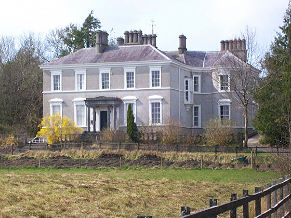
Loughcrew House

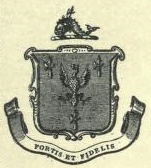
NAPER OF LOUGHCREW

THE NAPERS WERE THE SECOND LARGEST LANDOWNERS IN COUNTY MEATH, WITH 18,863 ACRES

The family of NAPER or NAPIER claims descent from the ancient Scottish Earls of Lennox, raised to that dignity by King MALCOLM III, about the year 1057:
The claim is sustained by the certificate of SIR ARCHIBALD NAPIER, knight, of Merchiston, Deputy Treasurer of Scotland, and of the Privy Council to CHARLES I, enrolled in the College of Arms, by Sir William Segar KG, at the desire of Sir Robert Napier, knight and baronet, of Luton Hoo, Bedfordshire.
ALEXANDER NAPIER, son of Sir Alexander Napier, and brother of Sir Archibald, came to England in the time of HENRY VIII and settled at Exeter.

JOHN NAPIER ESQ, a younger son of Sir Alexander Napier, knight, of Merchiston, the common ancestor of the LORDS NAPIER, and of the Napiers or Napers (of whom we are about to treat), came into England in the reign of HENRY VII, and settled at Swyre, Dorset, where he lies interred.

His 2nd, or, by some accounts, 3rd son,

JAMES NAPIER ESQ, of Baglake or Punknoll, Dorset, espoused a lady named Hilliard. The youngest son,

SIR ROBERT NAPIER,  an eminent lawyer, was constituted, by ELIZABETH I, Chief Baron of the Exchequer in Ireland, in 1593, and received the honour of knighthood.

Sir Robert's descendant,

Colonel James Naper, took possession of half the barony of Fore in 1653 for £800, or sixteen shillings per acre, "for his services to the Crown" and Lord Protector Cromwell.

The Plunkett family had formerly owned the land and the grounds host the annual Mass in honour of St Oliver Plunkett every July. 

The Naper estates would eventually grow to 180,000 acres in counties Meath, Westmeath and Cavan, helped by the Colonel`s marriage to the sister of Sir William Petty, a senior Dublin Castle official.
The Colonel`s son, James, was appointed High Sheriff of Meath in 1702, a post that several of his descendants would also hold. His son, James Lennon Naper Dutton, took his mother`s maiden name but another son, William, resumed the Naper surname and commissioned the important 1778 map of the district.
James Lennox William Naper (1791-1868) commissioned the building of Loughcrew House in 1823, a year after he was appointed High Sheriff of Meath.

A busy landlord and writer, he served as chairman of the Poor Law Guardians during the Famine years and subsidised the emigration of tenants to Canada in the 1830s.

His son, James Lenox Naper, also served as High Sheriff and was a major in the Meath Militia while also enduring the first major fire at Loughcrew House in 1888.
His son, William Lenox Naper, was awarded the Military Cross for services in the Royal Horse Guard during World War One but he died without issue and his widow Adela married the colourful adventurer, Rodney Matthews in 1946. His spending seriously impacted on the estate before he disappeared in his plane in the Irish Sea in 1953.
A cousin of William Lenox, Merrick Naper, died in Africa that same year before he could inherit and Merrick`s brother, Nigel, inherited the 1,500-acre estate before suffering two major fires in the house in 1959 and 1964.

The Irish Land Commission took 600 acres of the estate in 1967 and it was divided between his three sons on Nigel`s death in 1978.

Emily and Charles Naper have converted the old conservatory, pavilions, servant quarters and stables into the current living area, school of gilding and studio area.
Emily Jane Dashwood was born in 1958, eldest child of Sir Francis John Vernon Hereward Dashwood Bt (Premier Baronet of Great Britain). She married Charles William Lennox Naper in 1981.
They have revived the 17th century gardens and established Loughcrew Garden Opera.


LOUGHCREW today comprises the vestiges of Loughcrew House, the Gardens, ancillary accommodation and about 200 acres of parkland and grounds. 

Loughcrew Garden Opera has been holding operas and concerts in the grounds of the estate since 2000 during the summer months, which has proved immensely popular.

Weddings, exhibitions and craft workshops have also been held in the large rooms within the courtyard buildings.

Remaining within the Naper family from the 17th Century to the present day, Loughcrew has had a turbulent and fascinating history. 


Originally the seat of the Plunkett family, its most famous member being St Oliver Plunkett, whose church still remains today on the estate, the first Loughcrew House was built in the 1600s by the Naper family, where the current formal gardens exist, amidst an awesome 180,000 acre estate.

Subsequently destroyed by fire, the next Loughcrew House was designed by Charles Cockerel in 1821 for the Naper family.

In 1964 this house, too, was destroyed by fire and all that remains today is the giant portico (below), rebuilt and free-standing as a modern day folly, and a hard tennis court within the old footprint.

Mark Bence Jones, in his guide to Irish Country Houses, describes the vast stones and fallen capitals of the 1820's neo-classical house, designed by Cockerell, once strewn about the ground like the remains of some lost city of antiquity.

The current house grew out of The Garden House, a large and interesting stone building attached to the original courtyards, unusual in its design, and which used to house an array of flora and exotic plant-life. 

The rooms that make up the house were in fact originally the palm houses, the azalea houses and the furnace rooms.

It currently comprises two principal reception rooms, including a particularly fine drawing room, two sun-rooms, kitchen, 5 bedrooms, basement and a guest wing with three further bedrooms.


LOUGHCREW GARDENS have been created by generations of the Naper family since the 1660s. The Gardens are open to the public for a number of months during the year.

The result is a stunning combination of vistas, with water and archaeological features and many unusual trees, shrubs and flowers. 

A host of enchanting features are displayed in a setting steeped in atmosphere and history, including a medieval motte and the ruins of Saint Oliver Plunkett's family church and tower house.

The surviving 17th century features include a magnificent yew walk, foundations of a longhouse and a walled garden from which a canal and a parterre have been relocated in replica. 

In the 19th century these earlier elements were enveloped in a comprehensive development of parkland, water gardens, specimen trees, follies, rockeries, wood walks and magnificent vistas. 

The central area of approximately six acres now includes a lime avenue, extensive lawns and terraces, magnificent herbaceous border, ‘Grotesque Rockery and Grotto’, Hellfire garden, watermill, fountain, and symbolic statues and sculptures.

A large, log-cabin-style visitor centre with car park is located at the entrance to the gardens. This contains a spacious coffee shop on the ground floor with small kitchen and lavatories. 

A covered decked area provides outdoor seating. On the first floor is a large room for a crèche or craft centre with lavatories.

First published in June, 2011.

Mossvale House

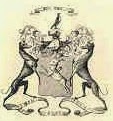
CHARLEY OF SEYMOUR HILL


The family of Charley, or Chorley, passing over from the north of England, settled in Ulster in the I7th century, at first at Belfast, where they were owners of house property for two hundred years; and afterwards at Finaghy, County Antrim, where  

RALPH CHARLEY (1664-1746), of Finaghy House, was seated. His son,  

JOHN CHARLEY (1712-93), of Finaghy, died aged 81, leaving a son and successor,

JOHN CHARLEY (1744-1812), of Finaghy House, born in 1744; married in 1783, Anne Jane, daughter of Richard Wolfenden, of Harmony Hill, County Down. His 2nd son,

MATTHEW CHARLEY (1788-1846), of Finaghy House, married, in 1819, Mary Anne, daughter of Walter Roberts, of Colin House. His eldest son,

JOHN STOUPPE CHARLEY JP (1825-78), of Finaghy House, County Antrim, and Island of Arranmore, County Donegal; JP for counties Donegal, Antrim, and Belfast; High Sheriff of County Donegal, 1875-6.


John Charley married, in 1851, Mary Stewart, daughter of Francis Forster JP, of Roshine Lodge, County Donegal.

The 3rd son,

WILLIAM CHARLEY, of Seymour Hill, Dunmurry; married, in 1817, Isabella, eldest daughter of William Hunter JP, of Dunmurry, and died in 1838, aged 37. The eldest son,

JOHN CHARLEY, of Seymour Hill, died unmarried in 1843, aged 25, and was succeeded by his brother, 

WILLIAM CHARLEY JP DL (1826-1904), of Seymour Hill; married, in 1856, Ellen Anna Matilda, daughter of Edward Johnson JP, of Ballymacash, near Lisburn, and granddaughter of Rev Philip Johnson JP DL.

Mr Charley was juror of Great Exhibition, 1851; chairman of J & W Charley & Company. He wrote the book Flax And Its Products. He was succeeded by his son,

EDWARD JOHNSON CHARLEY (1859-1932), of Seymour Hill. His 6th son, 

COLONEL HAROLD RICHARD CHARLEY CBE DL (1875-1956), of Seymour Hill; 1st Battalion, Royal Irish Rifles; fought in the Boer War and First World War, with the 2nd Battalion, Royal Irish Rifles, and was wounded and became a PoW. 

In 1916 he started workshops for interned British servicemen at Murren. He was Officer-in-Charge for Technical Instruction for servicemen interned in Switzerland in 1917; Commissioner of British Red Cross Society, Switzerland, 1918; commander of the 1st Royal Ulster Rifles, 1919-23.

Appointed CBE, 1920; City Commandant, Ulster Special Constabulary, 1924-52; originator of the British Legion Car Park Attendants scheme (adopted throughout Great Britain); Honorary Colonel, 1938, Antrim Coast Regiment (Territorial Army).
His eldest son, 

COLONEL WILLIAM ROBERT (Robin) HUNTER CHARLEY OBE, born in 1924; married Catherine Janet, daughter of William Sinclair Kingan, in 1960. 

In 1943 he was enlisted in the Royal Ulster Rifles; fought in 2nd World War, and the Korean War; Commanding Officer, OTC Queen's University, Belfast, 1965-68; Officer, Most Venerable Order of the Hospital of St. John of Jerusalem. 

He retired from the army in 1971; was on Staff in 1972 at Northern Ireland Polytechnic; lived in 1976 at Seymour Lodge, Larch Hill, Craigavad, County Down.

Colonel Charley was appointed OBE (civil) in 1989, for services to The Forces Help Society and Lord Roberts' Workshops.


Mossvale House was adjacent to the Lagan Canal and originally belonged to the owners of the local mill.

It was acquired by the Charley family in 1820, when the mill and bleach works were purchased by William Charley (1790-1838) from Robert Johnstone. Mossvale was encircled by trees and had stabling for ten horses.
Captain Arthur Charley (1870-1944) lived here with his wife for several years after the Great War before moving into The Lodge at Dunmurry.

In 1936, Mossvale was rented out though sadly destroyed wantonly by fire.

The land and ruins remained in the family for another fifty years until it was sold in the 1980s.

A new house has been built on the site.

First published in March, 2011.

Tuesday, 21 May 2013

Royal Condolences


HER MAJESTY THE QUEEN HAS SENT A MESSAGE OF SYMPATHY TO THE PRESIDENT OF THE UNITED STATES OF AMERICA

"I was deeply saddened to hear of the loss of life and devastation caused by yesterday’s tornado in Oklahoma. Prince Philip joins me in offering our heartfelt condolences to the victims and their families at this difficult time. Our deepest sympathies go out to all those whose lives have been affected, as well the American people."

ELIZABETH R

Sir George White VC

© National Museums Northern Ireland

FIELD MARSHAL SIR GEORGE STUART WHITE VC GCB OM GCSI GCMG GCIE GCVO JP DL

George Stuart White was a son of James White, of White Hall, County Antrim, and his wife Frances Ann, daughter of George Stewart, Surgeon-General to the Army in Ireland and his wife Frances (daughter of Colonel William Stewart MP, of Killymoon Castle, County Tyrone).

He was born at Low Rock Castle, Portstewart, County Londonderry, in 1835.

 LOW ROCK CASTLE

He was educated at Bromsgrove School, Worcestershire and later at King William's College on the Isle of Man.

From 1850, he attended the Royal Military Academy, Sandhurst, where he was commissioned into the 27th (Inniskilling) Regiment of Foot in 1853, prior to serving at the Indian Mutiny.

In 1874, he married Amelia, daughter of the Ven Joseph Baly, Archdeacon of Calcutta, with whom he had one son and four daughters.

Major White fought in the 2nd Anglo-Afghan War in 1879 as second-in-command of the 92nd Regiment of Foot (later The Gordon Highlanders).

He was 44 years old when the following deeds took place in Afghanistan, for which he was awarded the Victoria Cross:

CITATION
For conspicuous bravery during the engagement at Charasiah on the 6th October, 1879, when, finding that the artillery and rifle fire failed to dislodge the enemy from a fortified hill which it was necessary to capture, Major White led an attack upon it in person.

Advancing with two companies of his regiment; and climbing from one steep ledge to another, he came upon a body of the enemy, strongly posted, and outnumbering his force by about 8 to 1. His men being much exhausted, and immediate action being necessary, Major White took a rifle, and, going on by himself, shot the leader of the enemy. This act so intimidated the rest that they fled round the side of the hill, and the position was won.

Again, on the 1st September, 1880, at the battle of Candahar, Major White, in leading, the final charge, under a heavy fire from the enemy, who held a strong position and were supported by two guns, rode straight up to within a few yards of them, and seeing the guns, dashed forward and secured one, immediately after which the enemy retired.
He became the commanding officer of the 92nd Foot in 1881.

He commanded a brigade during the 3rd Anglo-Burmese War of 1885, as a result of which he was promoted to major-general and was knighted in 1886.

In 1889 he took command at Quetta District.

Sir George became Commander-in-Chief, India, in 1893.
He was appointed Quartermaster-General to the Forces in 1898, holding that post until the following year. He was commander of the forces in Natal during the opening of the 2nd Boer War; and commanded the garrison at the Siege of Ladysmith 1899–1900, for which he was appointed GCMG.
General White became Governor of Gibraltar, 1900-04, and was promoted to field marshal in 1903.

He was Governor of the Royal Chelsea Hospital from 1905 until his death there in 1912.

Sir George was buried at Broughshane, County Antrim, his ancestral home, where a memorial now stands.

His Victoria Cross is displayed at the Gordon Highlanders Museum in Aberdeen.

Glengarriff Castle


THE WHITES WERE MAJOR LANDOWNERS IN COUNTY CORK, WITH 16,175 ACRES


The family of White claimed to derive its descent from a brother of the Rt Rev John White DD, Bishop of Winchester in 1557.

The immediate ancestor of this noble family came to Ireland during the English civil war which commenced in 1641.

This brother's descendant in the fourth degree, 

RICHARD WHITE, of Bantry, who was maternally descended from the Hamiltons of Armagh, married and was succeeded by his eldest son, 

SIMON WHITE, who married and, dying before his father, left issue, 

RICHARD WHITE, born in 1767. This gentleman was presented with a gold medal by the city of Cork for his spirited exertions on the arrival of the French forces in Bantry Bay, in 1797. His eldest son, 

COLONEL SIMON WHITE, elder brother of Richard, 1st Earl of Bantry, wedded Sarah, daughter of John Newenham, in 1801. Dying in 1838, he left issue, his only son,

ROBERT HEDGES EYRE WHITE, of Glengarriff Castle, born in 1809. He married Charlotte Mary, daughter of Thomas Dorman-Porter, in 1834.


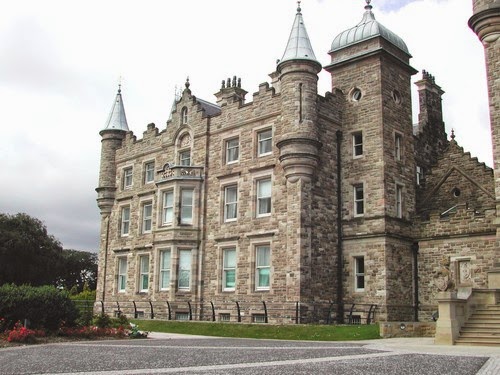
GLENGARRIFF CASTLE, County Cork, is a partially castellated house overlooking Glengarriff harbour.

It has a long, two-storey range with shallow, curved bows and ogee-headed windows.

At one end there is a square tower; the other end having a considerably loftier, battlemented round tower.

The round tower joins the main block to a battlemented wing at an obtuse angle to its end.

The Castle was built in the 1790s by Colonel Simon White, brother of the 1st Earl of Bantry.

It was built in the Gothic style, with a panoramic view of Glengarriff Bay.

The woodlands of the estate encompass a wide variety of trees including Oak, Beech, Japanese Red Cedar, European Larch, Chilean Pine and a variety of shrub and flora species.

Wildlife to be seen include red squirrel, sika deer, seals, fox and pine marten.

Over the years, Glengarriff has extended hospitality to royalty, artists and writers, such as Thackeray, Synge and Yeats; and, when living in the area, George Bernard Shaw is said to have written his play St Joan here.

The actress Maureen O'Hara, who starred with John Wayne in The Quiet Man, for many years kept a holiday home adjacent to Glengarriff Castle.

The castle operated as a resort until the late 1970s, but has since become derelict.

Bantry arms courtesy of European Heraldry.

Monday, 20 May 2013

Moira Castle

By kind permission of the Royal Irish Academy © RIA. Click to enlarge


A rare picture of Moira Castle in County Down, former seat of the Rawdons, Earls of Moira

Moira Castle, as described by Burke's, was
"a large, three-storey, 18th century house with a nine-bay front, consisting of a five-bay centre and a two-bay extension, slightly highter than the centre, on either side."

"Only the roof of the centre section was visible: The roofs of the side bays were either flat, or concealed by the massive cornices with which these bays were surmounted."

"The mansion had a pedimented and rusticated doorway; curved end bows."

"The front was prolonged by single-storey wings on either side, ending in piers with urns."
The Rawdons sold Moira Demesne to Sir Robert Bateson Bt in 1805 and moved to Montalto, near Ballynahinch, in the same county.

It is thought that Moira Castle was demolished ca 1870.

The water-colour above is by Gabriel Beranger (1729-1817).

Beranger was born in 1729 at Rotterdam, in the Netherlands. He moved to Dublin in 1750 to join other family members.

In 1756, he married his cousin Louise Beranger (d 1782), and shortly afterwards opened a print shop at St Stephen's Green.
Beranger became acquainted with several members of Dublin society who were then taking a great interest in Irish history and antiquities. In 1773 he and his antiquarian friends made the first of their tours through Ireland.
Beranger's wife died in April, 1782, and in June of that year, he married Elizabeth Mestayer.

In the early 1780s, he obtained a job as assistant ledger-keeper in the exchequer office. In later years his circumstances were eased after he inherited part of a fortune amassed in India by his brother-in-law, Colonel Mestayer.

Gabriel Beranger died at a house in St Stephen's Green on 18th February, 1817.

First published in March, 2011.

White of White Hall

WHITE OF WHITE HALL

THE WHITES OWNED 2,897 ACRES OF LAND IN COUNTY ANTRIM

The family of White, though long settled in Ulster, was of English extraction.

In the reign of CHARLES I, the Whites owned considerable property in the West Riding of Yorkshire, and they were seated at Hudson Hall.

During the English Civil War, they threw in their lot with the King, on whose behalf they raised and maintained, at their own expense, a troop of dragoons.

When the King's cause was lost, they were involved in its ruin; and one of the family, Fulke White, or Whyte, for so he spelt his name, took refuge in Ulster.
This Fulke settled, it would appear, in the town of Antrim, where he maintained himself for many years by "teaching a classical school"; but in 1687, being then a clergyman of the Presbyterian Church, he was invited by the Presbyterians of Broughshane, a village in the valley of the Braid, to become their minister.

THE REV FULKE WHITE, of White Hall, County Antrim, Minister of Broughshane, 1687; dying in 1716, was father of

THE REV JAMES WHITE, of White Hall. Dying in 1761, his son,

JOHN WHITE, of White Hall, who died in 1770, was father of

JAMES WHITE, of White Hall, Deputy Governor of County Antrim, 1793. Dying in 1809, he left two sons,
1.  JOHN, his heir;
2   JAMES ROBERT, who succeeded his brother.
JOHN WHITE, of White Hall, High Sheriff of Antrim, 1845, died in 1857 and was succeeded by his brother,

JAMES ROBERT WHITE, of White Hall; barrister-at-law; wedded Frances, daughter of George Stuart, of Donaghey, County Tyrone, surgeon-general of the Army in Ireland.

Following his decease, in 1872, he left two sons and two daughters. The eldest son,

 Royal Collection © Her Majesty Queen Elizabeth II

FIELD-MARSHAL SIR GEORGE STUART WHITE VC GCB OM GCSI GCMG GCIE GCVO (1835-1912), born at Low Rock Castle, Portstewart, County Londonderry.

He married Amelia Maria, daughter of Joseph Daly, in 1874, at Bengal, India, and had issue, three children:

Sir George died at the Royal Hospital, Chelsea, and was buried with his ancestors at Broughshane, County Antrim, in 1912.

His only son,

CAPTAIN JAMES ROBERT (Jack) WHITE DSO (1879-1946), of White Hall, left issue,

DERRICK O'CLANCY WHITE (1942-2007).